Top 10 Benefits of Metal Stamping for Manufacturing Efficiency?
Metal stamping is a cornerstone of modern manufacturing. According to industry reports, this process boosts efficiency in production by up to 70%. Companies worldwide rely on metal stamping for precision and speed. In sectors like automotive and electronics, metal stamping creates complex parts quickly and accurately. The global metal stamping market is projected to grow to $250 billion by 2025.
Challenges do exist. Not all firms achieve optimal efficiency. Factors like machinery maintenance and skilled labor shortages can hinder progress. Many manufacturers underestimate the importance of proper tooling in enhancing production rates. Cost-control measures are often overlooked, affecting profitability. This highlights the need for continuous improvement in metal stamping processes.
Organizations must embrace innovation. Industry leaders are investing in automation and smart technologies. These advancements can transform workflows. Emphasizing quality control also ensures that metal stamping continues to meet high standards. Reflecting on these points, it’s clear that while metal stamping is highly beneficial, there is always room for growth and adaptation.
Advantages of Metal Stamping in Modern Manufacturing Processes
Metal stamping is becoming increasingly vital in modern manufacturing. This technique involves shaping metal sheets into desired forms through precise pressure and tooling. One major advantage is efficiency. The process can produce large quantities of parts quickly, saving time and labor costs. For example, companies can create hundreds of components in just a few hours. This rapid production cycle often translates to shorter lead times for customers.
Another key benefit lies in the accuracy of metal stamping. High precision can minimize waste, which is crucial in industries like automotive and aerospace. Parts fit together seamlessly, reducing the need for rework. Nonetheless, achieving this level of precision requires skilled operators and well-maintained machinery. Many manufacturers face challenges in training staff and keeping equipment updated. The balance between speed and quality is delicate. Companies must constantly evaluate their processes to ensure they meet the necessary standards without sacrificing efficiency.
Top 10 Benefits of Metal Stamping for Manufacturing Efficiency
This bar chart illustrates the top 10 benefits of metal stamping in manufacturing efficiency, showcasing aspects such as cost efficiency, high precision, and speed of production. Each benefit is rated on a scale of 0 to 100, representing the effectiveness and impact of metal stamping in modern manufacturing processes.
Improvement in Production Speed and Volume Through Metal Stamping
Metal stamping is revolutionizing manufacturing efficiency, particularly improving production speed and volume. Studies indicate that businesses utilizing metal stamping can increase their output by up to 50%. This increase is due to the automated nature of stamping processes, which allows for high precision and reduced cycle times.
Moreover, the consistency of metal stamping reduces waste significantly. Research shows that processes using metal stamping yield an 8% decrease in material waste compared to traditional methods. This not only boosts efficiency but also cuts costs, making it an attractive option for manufacturers. However, some companies struggle with the initial investment in advanced stamping technology.
Machines can be expensive, leading to hesitation. Additionally, operators need specialized training, which takes time and resources. Companies often reflect on their processes. Balancing cost and efficiency remains a challenge in the industry. Nonetheless, the long-term benefits are hard to ignore. Metal stamping is not just about speed; it’s about smarter manufacturing.
Top 10 Benefits of Metal Stamping for Manufacturing Efficiency
| Benefit |
Description |
Impact on Production |
| High Production Speed |
Metal stamping enables quick manufacturing cycles. |
Reduces lead time significantly. |
| Cost Efficiency |
Lower per-unit costs due to scale production. |
Enhances profitability. |
| Consistency and Accuracy |
High precision in dimensional control. |
Improves product quality. |
| Reduced Waste |
Optimized material usage leads to less scrap. |
Lower raw material costs. |
| Versatility |
Can produce complex shapes and parts. |
Expands design possibilities. |
| Automation Friendly |
Compatible with automation technology. |
Further increases production speed. |
| Less Labor Intensity |
Requires fewer workforce hours per unit. |
Enhances operational efficiency. |
| Improved Safety |
Mechanized processes reduce risk of accidents. |
Safer work environment. |
| Material Strength |
Maintains the integrity of the material used. |
Durable final products. |
| Rapid Prototyping |
Quick development of prototypes for testing. |
Accelerates product development cycles. |
Cost-Effectiveness of Metal Stamping Compared to Traditional Methods
Metal stamping is becoming increasingly popular in the manufacturing industry. It offers significant cost-effectiveness over traditional production methods. Many manufacturers are realizing that this process can reduce expenses while maintaining quality. It streamlines production, significantly cutting labor costs.
Unlike traditional machining methods, metal stamping requires less manual intervention. This automation minimizes human errors. However, not all designs are suitable for stamping. Some intricate shapes may require additional processes. Still, the reduced material waste in stamping can offset these challenges.
Moreover, the speed of production is notable. A single stamping press can produce thousands of parts in a few hours. This high output rate lowers unit costs. Yet, manufacturers must be cautious about initial tooling costs. Investing in high-quality dies and presses is crucial for long-term efficiency. A thoughtful approach helps bridge the gap between cost and quality.
Enhanced Precision and Quality Control in Metal Stamping Applications
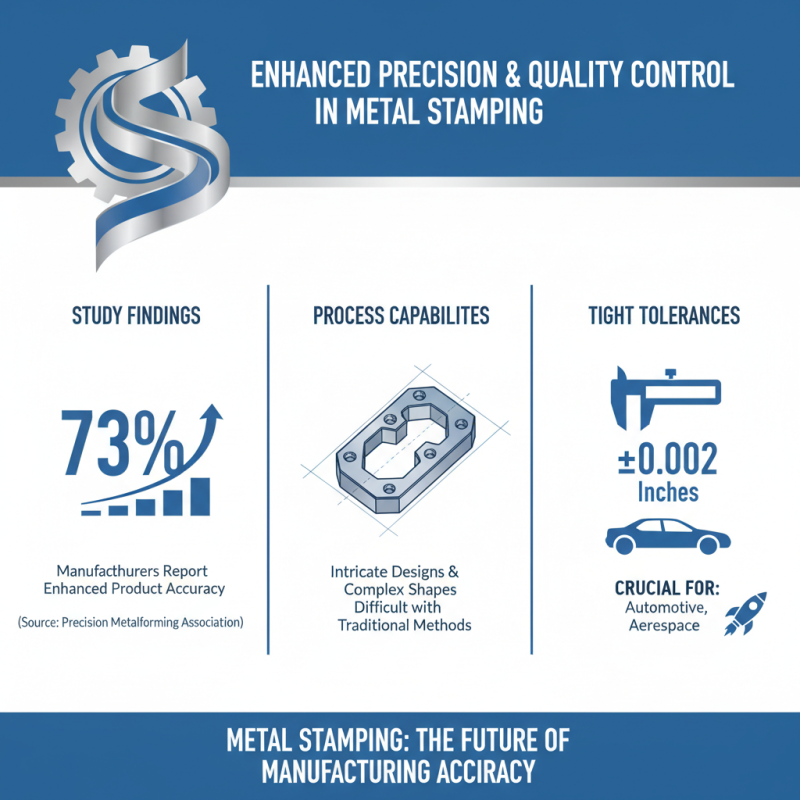
Metal stamping offers remarkable advancements in precision and quality control. According to a study by the Precision Metalforming Association, nearly 73% of manufacturers report enhanced product accuracy through metal stamping techniques. This process allows for intricate designs and complex shapes, often impossible with traditional methods. Tools used in metal stamping can achieve tolerances as tight as ±0.002 inches, which is crucial in industries like automotive and aerospace.
Quality control in metal stamping is equally significant. Automated inspection systems gather real-time data during production. This approach minimizes defects and ensures consistent quality. A report by the International Journal of Advanced Manufacturing Technology shows that companies utilizing real-time quality checks experience up to a 30% reduction in defective parts. However, reliance on these systems can sometimes overlook human error, leading to gaps in inspection processes.
Moreover, while metal stamping improves efficiency, it isn’t without challenges. The costs of setting up metal stamping operations can be high. Companies must invest in the right machinery and skilled labor. Flaws in the design phase can lead to production delays or increased waste. Some manufacturers grapple with these issues, leading to reflections on balancing cost and quality.
Versatility of Materials and Designs in Metal Stamping Techniques
Metal stamping is a highly versatile manufacturing method. It involves shaping metal using various techniques. The ability to work with multiple materials enhances its appeal. Steel, aluminum, and copper are common choices. Each material brings unique properties to the final product. For instance, aluminum is lightweight and corrosion-resistant. Steel offers strength and durability. This versatility allows manufacturers to meet diverse customer needs.
Let's consider design flexibility. Metal stamping can produce intricate shapes and designs. Reports show that over 70% of manufacturers find customized designs crucial. Precision engineering is achievable with this technique. However, complexities can arise. The learning curve for new designs may be steep. It can lead to production delays if not managed carefully. Yet, the potential for unique, high-quality products often outweighs these challenges.
High-volume production is another significant benefit. Metal stamping can produce thousands of parts quickly. A recent study found that manufacturers saved up to 40% on costs. This efficiency is vital in a competitive market. Yet, not every company may have the resources for advanced stamping presses. Investing in this technology requires careful financial planning. Overall, metal stamping stands out for its material and design versatility, making it a valuable asset in manufacturing.