How to Choose the Best CNC Service for Your Needs?
When selecting a CNC service, it's essential to ensure it aligns with your specific needs. A report by the International Federation of Robotics (IFR) indicates that the global CNC market is expected to reach $100 billion by 2025. This growth underlines the importance of choosing the right partner in this competitive landscape.
Many companies face challenges in identifying reliable CNC services that offer quality and precision. Research shows that about 30% of manufacturers are dissatisfied with their current CNC providers. This dissatisfaction often stems from communication issues and unmet expectations. A well-chosen CNC service can enhance production efficiency and reduce lead times, making the selection process critical for long-term success.
Consider your project requirements, budget, and deadlines. Experience and expertise in your industry play a significant role in service reliability. Collaborating with a CNC service that understands these factors can lead to better outcomes. However, self-reflection is necessary; assess your current needs and the gaps in your existing partnerships. This can guide you toward a more effective CNC service provider.

Understanding Your Project Requirements for CNC Services
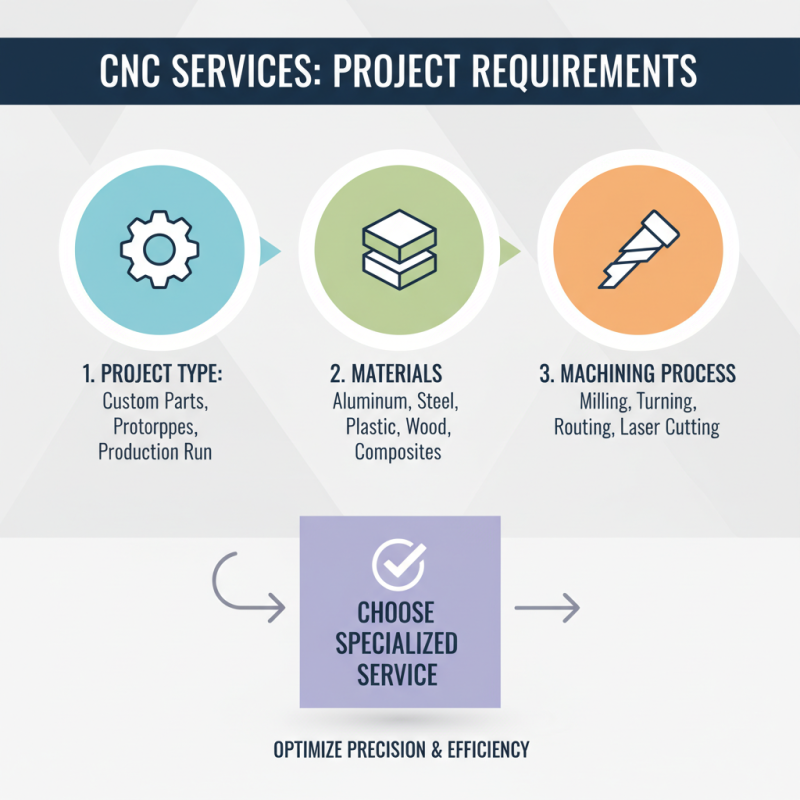
Understanding your project requirements is vital when selecting a CNC service. Start by identifying the specifics of your project. What materials will you be using? Aluminum, plastic, or wood? Each material has unique properties that affect the machining process. Knowing this helps in finding a service that specializes in your chosen material.
Next, think about the complexity of your design. Are you working with intricate details or simple shapes? Complex designs might require advanced CNC machines and skilled operators. Assess the service provider's portfolio. Look for examples that mirror your project’s intricacy. This evaluation can reveal whether they possess the necessary expertise.
Budget considerations are also essential. CNC services might vary significantly in price. Determine how much you’re willing to spend, yet remain flexible. Sometimes, a higher cost translates to better quality or faster turnaround time. Be ready to ask questions and seek clarity on pricing structures. Transparency is key to ensuring reliability in the service you choose.
Assessing CNC Service Providers: Key Qualifications and Certifications
When evaluating CNC service providers, key qualifications and certifications play an essential role. Start by checking if they hold ISO certifications. ISO 9001 is a standard that ensures quality management. A report from the International Organization for Standardization shows that companies with ISO certification can improve operational efficiencies by up to 30%. This efficiency can lead to better project timelines and cost management.
Tips: Always ask for documentation of certifications. Verify their credibility to ensure reliability.
Look for specialized certifications as well. For example, specific industry standards, like AS9100 for aerospace or IATF 16949 for automotive, indicate expertise in those fields. A 2021 survey indicated that 70% of top manufacturers prioritize these qualifications when choosing a service provider. This choice ensures that the provider understands the nuances of your industry.
Tips: Consider the provider's past projects. Review case studies that demonstrate their skills and outcomes.
Another factor to reflect on is the experience of the team. A skilled workforce can make a significant difference in precision and innovation. Yet, experience alone doesn’t guarantee quality. New providers may bring fresh approaches. Balancing experience with innovation can help in making the right choice.
Tips: Don’t hesitate to interview key personnel. Their insights can reveal valuable information about the company’s capabilities.
How to Choose the Best CNC Service for Your Needs?
Evaluating Pricing Models: Cost vs. Quality in CNC Services
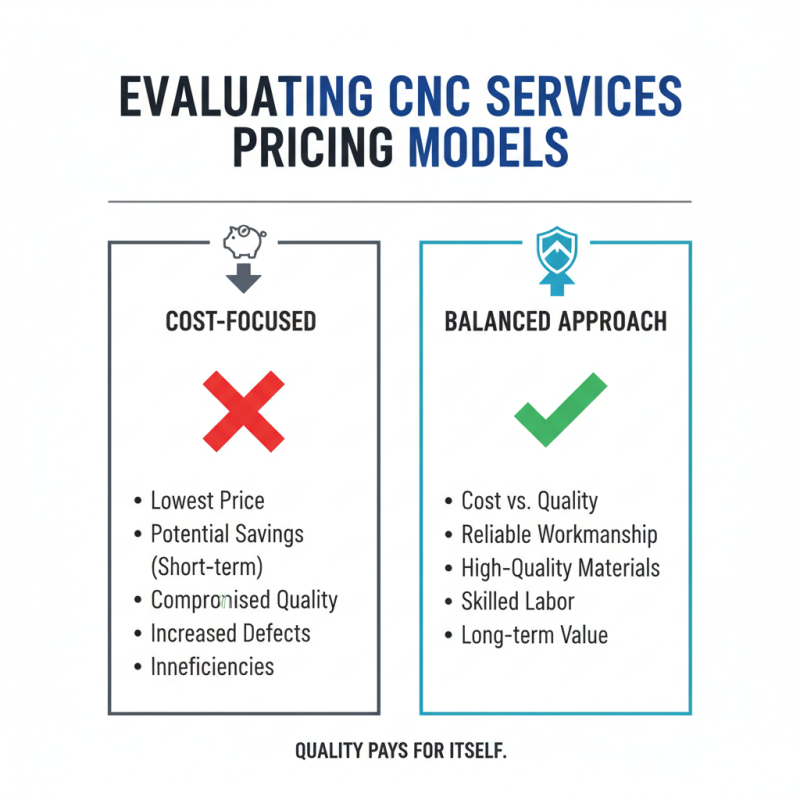
When evaluating CNC services, pricing models play a crucial role. Many businesses opt for the lowest price, thinking it guarantees savings. However, this approach can be misleading. Cheaper services often compromise on quality, leading to defects or inefficiencies. It is essential to find a balance between cost and the quality of workmanship. High-quality materials and skilled labor contribute significantly to the final outcome.
Consider the trade-offs when assessing pricing. Some providers offer tiered pricing based on the complexity of projects. This can lead to higher initial costs but ultimately save in rework and material waste. A CNC provider with transparent pricing, detailing what each cost covers, signals reliability. Pay attention to their communication practices. Poor customer service may indicate underlying issues, even if the prices seem attractive.
Before making a decision, evaluate past customer feedback. Look for testimonials and case studies. They reveal how other clients' experiences align with your expectations. Be open to asking questions during consultations. A reputable manufacturer welcomes inquiries about their processes. This interaction can clarify any doubts and demonstrate their expertise. Investing the time to weigh costs against quality might save future headaches.
Comparing Technology and Equipment Used by CNC Service Providers
When selecting a CNC service, technology and equipment play a crucial role. Different providers use varying technologies, and understanding these aspects ensures you make an informed choice. Advanced CNC machines, like those with multi-axis capabilities, enable intricate designs. On the other hand, basic equipment may only handle simpler patterns.
Tips: Always inquire about the specific machines in use. Ask for a demonstration if possible. This will help you gauge their skill level.
Material versatility is another factor. Some CNC services cater to metals, while others focus on plastics or composites. The type of materials a provider works with can greatly impact your project. Moreover, check if they have experience with your specific material requirements.
Tips: Don’t hesitate to discuss your project needs openly. A good provider will appreciate clarity and may offer valuable insights.
Additionally, precision and tolerances are essential in CNC machining. Providers should have stringent quality control measures in place. This ensures consistency and reduces the risk of errors.
Tips: Look for certifications that indicate their commitment to high-quality standards. Certifications can be a good sign of reliability and professionalism.
How to Choose the Best CNC Service for Your Needs? - Comparing Technology and Equipment Used by CNC Service Providers
| CNC Service Type |
Technology Used |
Equipment |
Materials Supported |
Precision Level |
Typical Lead Time |
| CNC Machining |
Milling & Turning |
3-Axis CNC Machines |
Aluminum, Steel, Plastics |
±0.01 mm |
1-4 weeks |
| Laser Cutting |
Laser Technology |
Laser Cutting Machines |
Metal, Wood, Acrylic |
±0.05 mm |
1-3 weeks |
| 3D Printing |
FDM, SLA |
FDM Printers, SLA Printers |
Plastics, Resin |
±0.1 mm |
2-5 weeks |
| Waterjet Cutting |
High Pressure Waterjet |
Waterjet Cutting Machines |
Stone, Glass, Metal |
±0.1 mm |
1-2 weeks |
Analyzing Turnaround Times and Capacity for Your CNC Projects
When selecting a CNC service, turnaround times and production capacity are crucial factors. Research indicates that nearly 40% of manufacturers face delays due to inefficient processes. Quick turnaround can significantly improve project outcomes. Many CNC services offer lead times of one to two weeks. Yet, some may promise faster results without the resources to deliver. Assessing a service's actual turnaround track record is essential.
Capacity matters too. A provider with higher capacity can handle larger orders more efficiently. Reports show that suppliers with expanded machinery often achieve better output. However, they might lack the flexibility for smaller, custom jobs. Understanding the balance of capacity and flexibility is key. A service with inadequate capacity might struggle during peak demand, leading to potential delays.
Transparency is essential in any CNC partnership. Requesting data on previous projects helps gauge a service's reliability. Look for testimonials or performance metrics that emphasize quality and speed. Conducting thorough research into these areas will guide you toward a CNC service that matches your project requirements effectively.