How to Choose the Best CNC Service for Your Projects?
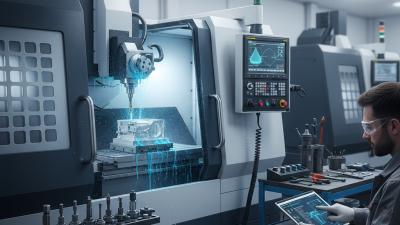
Choosing the right CNC service for your projects can be challenging. Many factors come into play. The right service can enhance productivity and ensure precision. A poor choice, on the other hand, can lead to delays and additional costs that disrupt your timeline.
When selecting a CNC service, consider experience and expertise. Not all providers have the same level of skill. Take the time to review their portfolio and past work. Look for specific examples relevant to your project. Quality matters in CNC machining; low-quality outputs aren’t acceptable.
Additionally, communication plays an essential role in your decision. A responsive service that understands your needs is invaluable. Delays in understanding and project execution can be costly. A smooth interaction is crucial. Reflection on past experiences, both good and bad, can guide you. Ultimately, a careful selection of your CNC service can lead to successful outcomes for your projects.
Understanding CNC Services and Their Applications
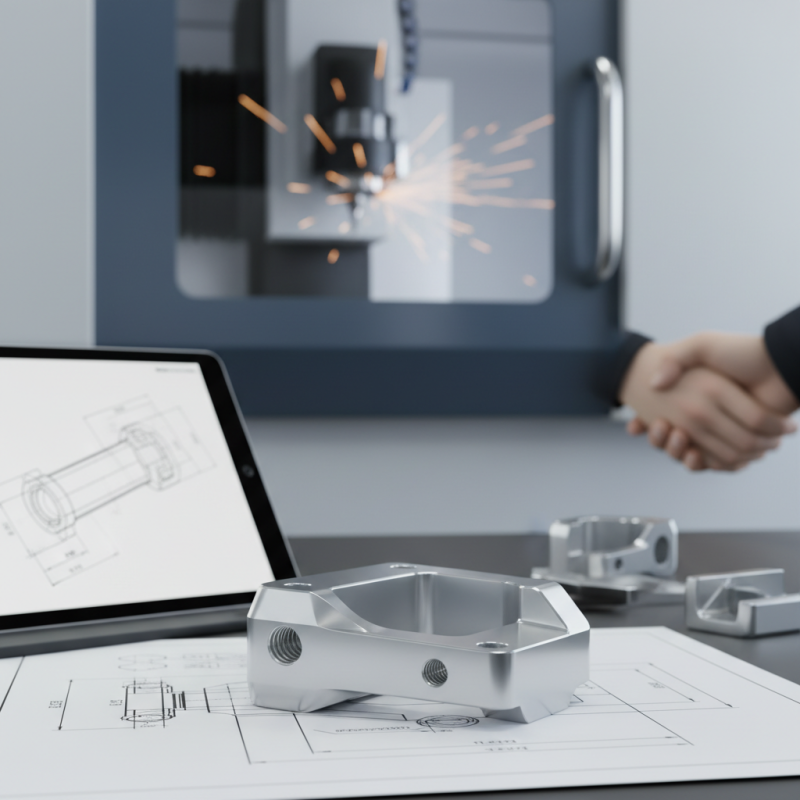
CNC services refer to computer numerical control processes that automate machine tools. These services find applications in various industries, including aerospace, automotive, and medical. CNC technology can create intricate parts from different materials. Accuracy and precision are key benefits. Yet, understanding the specific needs of your project is crucial.
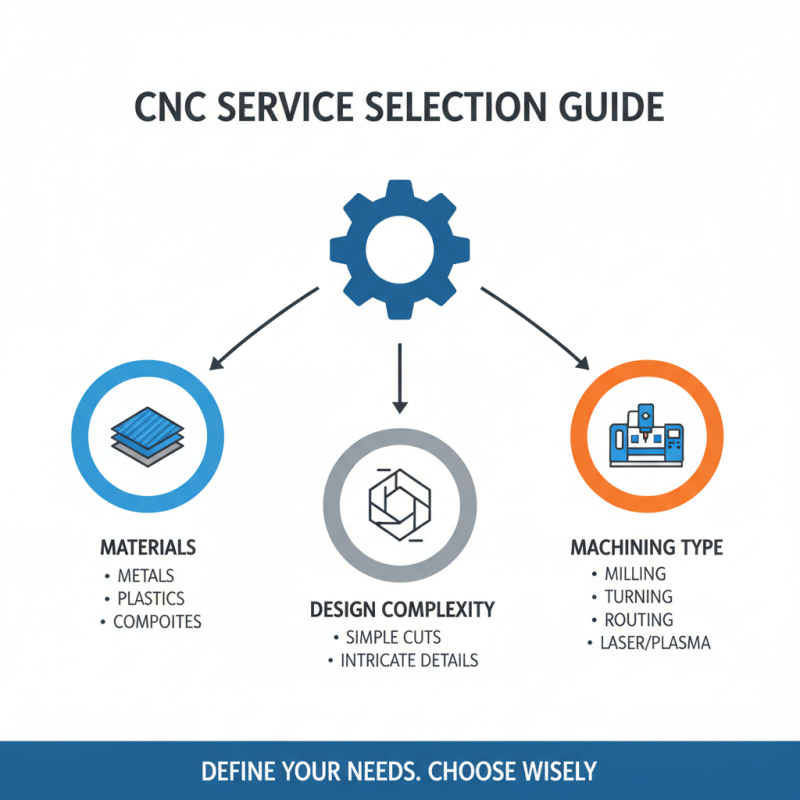
When selecting a CNC service, consider the material types you need. Each material demands different machining techniques. Some CNC machines excel with metals, while others perform well with plastics or composites. This specificity can affect the turnaround time. Timeliness matters—missing deadlines can disrupt your entire project workflow.
Don’t overlook the importance of communication with your CNC provider. Clear dialogue can preempt manufacturing issues. However, not every service excels in this area. Some may promise more than they can deliver. Research user reviews to gauge their reputation. This effort can save you time and resources in the long run. Remember, even the best CNC services may have flaws that require careful consideration.
Choosing the Right CNC Service: A Comparison of Service Types
Identifying Your Project Requirements for CNC Machining
When selecting a CNC service, understanding your project requirements is crucial. Focus on the specifics of what you need. Define the materials you want to work with. Metals, plastics, or composites? Each requires different machinery and expertise. Consider the complexity of your design. Are you looking for simple cuts or intricate details? This influences the type of CNC machining your project will demand.
**Tip:** Document your project specifications clearly. This will help when discussing with potential CNC service providers.
Next, think about the volume of production. Are you executing a small batch or a large-scale production? Some CNC services specialize in high volume, while others may cater to prototypes. The choice here affects pricing and lead time.
**Tip:** Create a timeline for your project. Knowing your deadlines will guide you in finding a service that aligns with your schedule.
Lastly, review potential CNC services’ portfolios. Not all providers may deliver the quality you expect. Scrutinize their previous work and see if it matches your vision. Sometimes, feedback may not meet expectations, creating uncertainty. Reflect on what you truly value—precision, speed, or cost? Prioritizing these can lead to better decisions.
Evaluating CNC Service Providers: Key Factors to Consider
When choosing a CNC service provider, consider several key factors. Start by evaluating their expertise. Look for operators with experience in your specific material and project type. This depth of knowledge allows them to understand nuances better. It’s essential to assess their previous work. A portfolio showcasing diverse projects can indicate their capability.
Next, examine their quality control processes. Ask about how they ensure precision and reliability. A provider that prioritizes consistent quality will likely meet your needs more effectively. Communication is another important factor. Clear, prompt responses to your inquiries are essential for smooth collaboration. A delay in communication can lead to misunderstandings.
Lastly, consider their flexibility in handling changes. Project specifications can evolve. A provider that adapts to shifts in your plans is invaluable. However, be cautious; some may promise more than they can deliver. Reflect on their past reviews but remember that perfection is rare. Balancing these aspects can help you find a CNC service that aligns with your project goals.
Comparing Costs and Quality of CNC Services
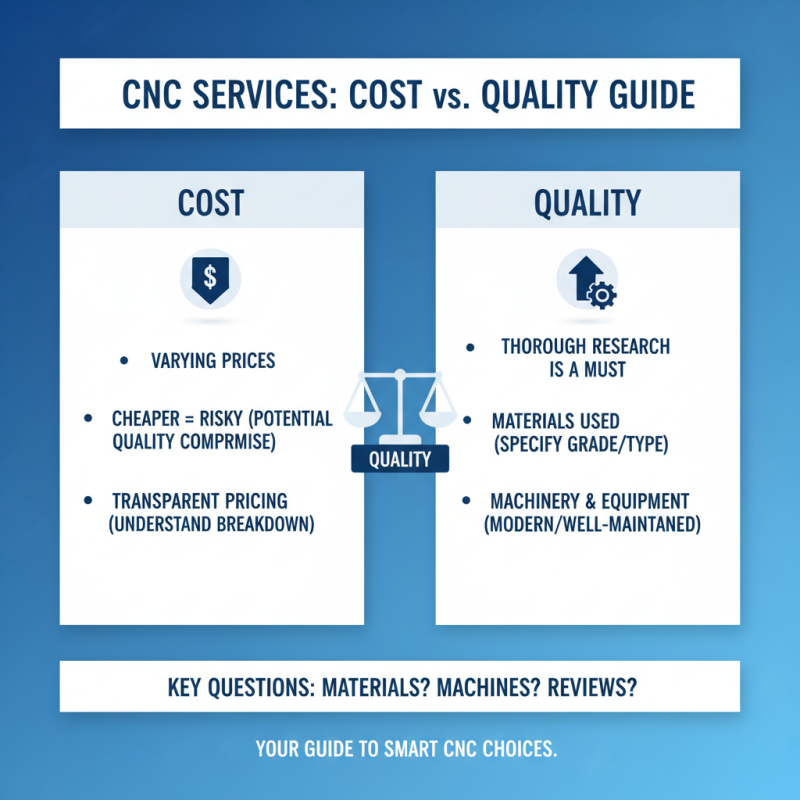
When comparing costs and quality of CNC services, you must conduct thorough research. Many CNC providers offer varying prices. Cheaper services can be tempting, but they often compromise quality. Look for transparent pricing models that explain what you pay for. Ask about the materials they use and the machines they operate. Quality often reflects in the equipment.
Reviews and testimonials can reveal a lot about a CNC service's reliability. However, don't rely solely on star ratings. Dig deeper into customer experiences. A service might excel in cost but deliver subpar results or long turnaround times. Communication is also essential. A responsive service provider can significantly ease your project management.
Consider the scope of your project when making a choice. Sometimes, a slightly higher cost leads to better craftsmanship or faster delivery. It might be worth paying for expertise. Reflect on past experiences. Have these providers met or exceeded expectations? Your decision should not be rushed. Each project is unique, and the right CNC service can elevate your results.
Assessing Customer Support and Communication in CNC Services
When choosing a CNC service, customer support and communication are crucial elements. According to a recent study by Industry Week, about 70% of customers cite poor communication as a primary reason for dissatisfaction. This statistic highlights a significant gap that many CNC service providers fail to address. Effective communication ensures that clients’ needs are understood and met throughout the project lifecycle.
A responsive support system can make a remarkable difference. Many manufacturers report that rapid response times improve client satisfaction by over 50%. Yet, some CNC services still lack dedicated support teams. This deficiency can lead to misunderstandings and project delays. Asking about direct lines of communication can help gauge how effectively a company can respond to inquiries and issues.
Moreover, the quality of customer support can impact project outcomes. Regular updates should be a standard practice, but not all providers meet this expectation. Some clients have reported feeling left in the dark about project progress. This lack of transparency can erode trust and diminish the overall experience. Ensuring that a CNC service provider values clear, proactive communication can lead to a more seamless collaboration.
How to Choose the Best CNC Service for Your Projects?
| Parameter |
CNC Service A |
CNC Service B |
CNC Service C |
| Response Time |
24 hours |
48 hours |
12 hours |
| Technical Support |
Email and Phone |
Email only |
Phone and Chat |
| Customer Feedback |
Positive |
Mixed |
Very Positive |
| Communication Clarity |
High |
Moderate |
Excellent |
| Availability |
24/7 |
Business Hours |
24/7 |