10 Essential Tips for Choosing the Right Punching Die for Your Projects?
Choosing the right punching die is crucial for the success of any project. The correct die determines precision in your work and the quality of the final product. Many factors influence this decision. It's easy to overlook details that seem minor, but they can significantly impact your project.
Consider the material you will work with. Different materials require different types of punching dies. This may seem obvious, yet many make mistakes here. A wrong choice can lead to inefficiency or even product failure. Take time to analyze the specs. Small changes can make a big difference in the outcome.
Understanding your project's specific needs is also vital. Not every punching die fits every job. Misjudgments can lead to wasted time and resources. Reflection on past experiences helps in making informed choices. This process can reveal what works best for your needs. Pay attention to the details, and choose wisely.
Understanding the Basics of Punching Dies and Their Applications
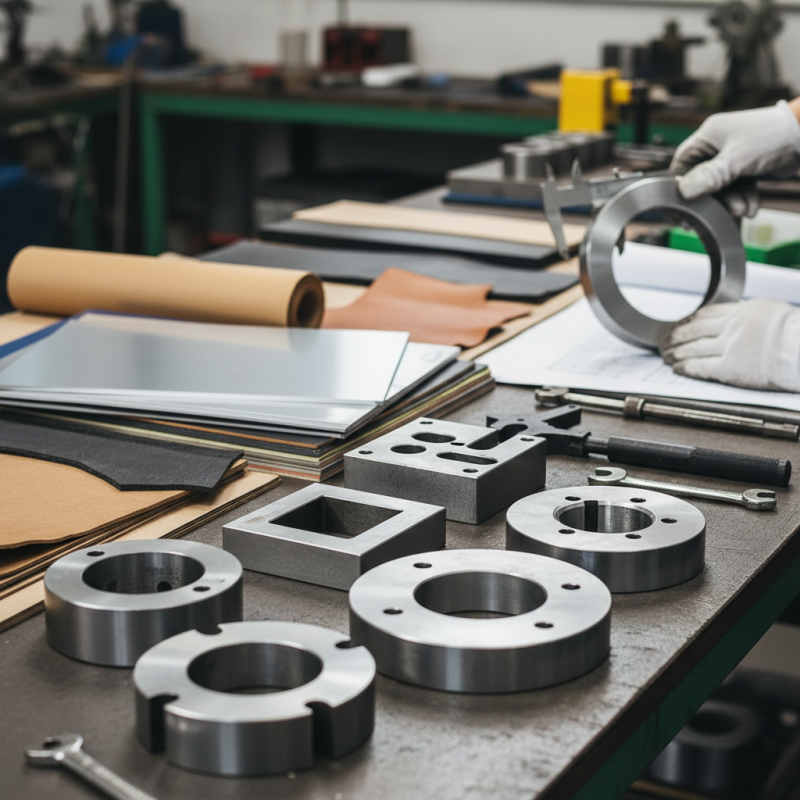
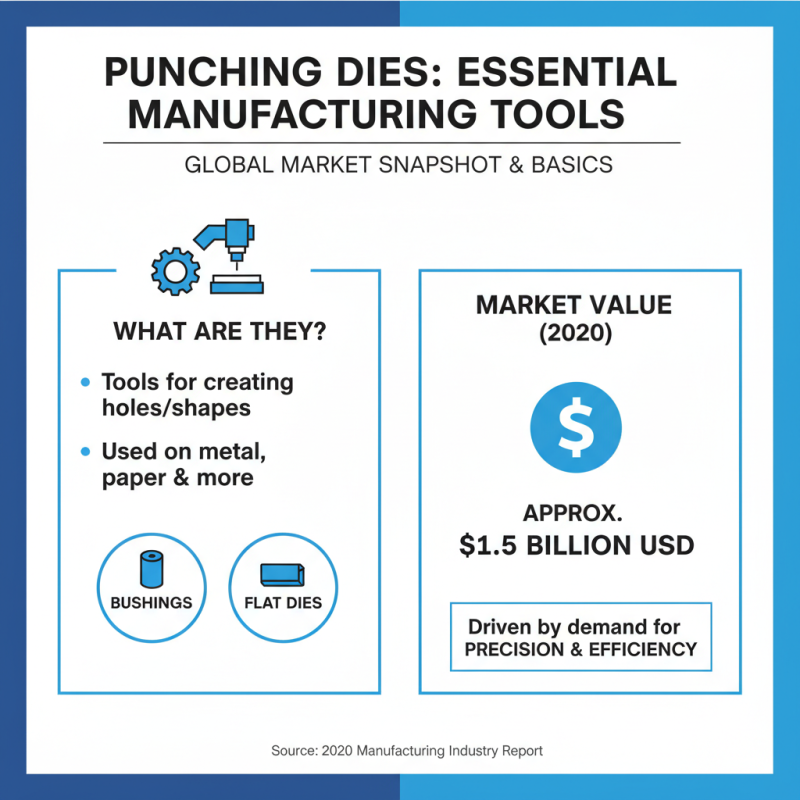
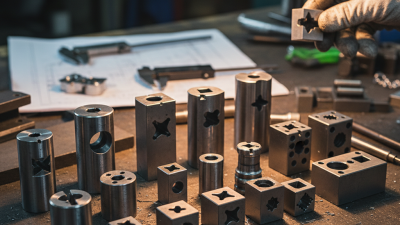
When considering punching dies, it's vital to grasp their basics. Punching dies are tools used in manufacturing to create holes or shapes in materials like metal and paper. They come in various forms, including bushings and flat dies. In 2020, the global punching die market was valued at approximately $1.5 billion. This figure reflects the increasing demand for precision and efficiency in production processes.
Selecting the right die can significantly affect project outcomes. For instance, the die's material, such as steel or carbide, influences durability and precision. A high-quality die can enhance production speeds by reducing wear. However, choosing a less suitable die may lead to increased material waste or prolonged machine downtime. Reports indicate that improper die selection can increase operational costs by up to 15%.
Understanding the application is crucial. Different industries require specific dies tailored to their needs. For example, automotive production demands high-precision dies due to stringent safety standards. In contrast, the packaging industry may prioritize versatility over absolute precision. Each choice comes with its trade-offs. Recognizing these nuances can lead to better project results.
Identifying Your Project Requirements for Punching Dies
When selecting a punching die, understanding your project requirements is crucial. Many projects involve specific materials, thicknesses, and shapes. For instance, a report from the Fabricators & Manufacturers Association states that the right die can improve efficiency by up to 30%. This efficiency is essential for project timelines and cost management.
Consider the material you'll be punching. Many manufacturers use carbon steel and stainless steel. Each requires different die specifications. According to industry studies, neglecting material compatibility increases wear and reduces the die's lifespan by 40%. This understanding proves essential, as production delays can arise from improper die choices.
Moreover, the complexity of the design impacts your die selection. Simple shapes might need straightforward dies, while intricate designs may require more advanced options. A survey showed that 25% of firms struggle with die selection due to unclear project specifications. This often leads to costly mistakes. Taking the time to identify your specific needs can prevent issues later in the process.
10 Essential Tips for Choosing the Right Punching Die for Your Projects
The following chart displays the importance of various factors when selecting the right punching die for your projects. Each factor is rated on a scale from 1 to 10 based on its significance to project success.
Evaluating Material Compatibility for Punching Die Selection
When selecting a punching die, evaluating material compatibility is crucial. Different materials require specific types of dies. For instance, softer metals may work well with standard steel dies. However, harder materials need more durable options. This can significantly impact the efficiency and quality of your projects.
It's essential to consider the material's thickness and properties too. Thicker materials often require reinforced dies to prevent damage. A mismatch can lead to premature wear or even failure. Selecting a die that matches your material can save time and costs. Think about the long-term effects of your choice.
Sometimes, project needs change unexpectedly. A die that works today might not be suitable for tomorrow’s requirements. Keeping a flexible approach allows for adjustments. Testing different materials can reveal surprising insights. Always learn from previous experiences. Each project presents unique challenges and opportunities.
10 Essential Tips for Choosing the Right Punching Die for Your Projects
| Tip No. |
Tip Description |
Material Compatibility |
Recommended Applications |
| 1 |
Understand the material type |
Steel, Aluminum |
Automotive parts |
| 2 |
Consider material thickness |
Up to 5mm |
Sheet metal processing |
| 3 |
Evaluate hardening characteristics |
Hardened steel |
Precision components |
| 4 |
Assess wear resistance |
Tungsten carbide |
High-volume production |
| 5 |
Choose appropriate die shape |
Varies by project |
Custom molding |
| 6 |
Consider tolerance levels |
±0.1mm |
Precision engineering |
| 7 |
Factor in production speed |
High-speed steel |
Mass production |
| 8 |
Assess machine capabilities |
CNC machines |
Complex shapes |
| 9 |
Analyze cost-effectiveness |
Various options |
Budget-sensitive projects |
| 10 |
Seek expert advice |
Expert consultants |
All application types |
Comparing Different Types of Punching Dies Available in the Market
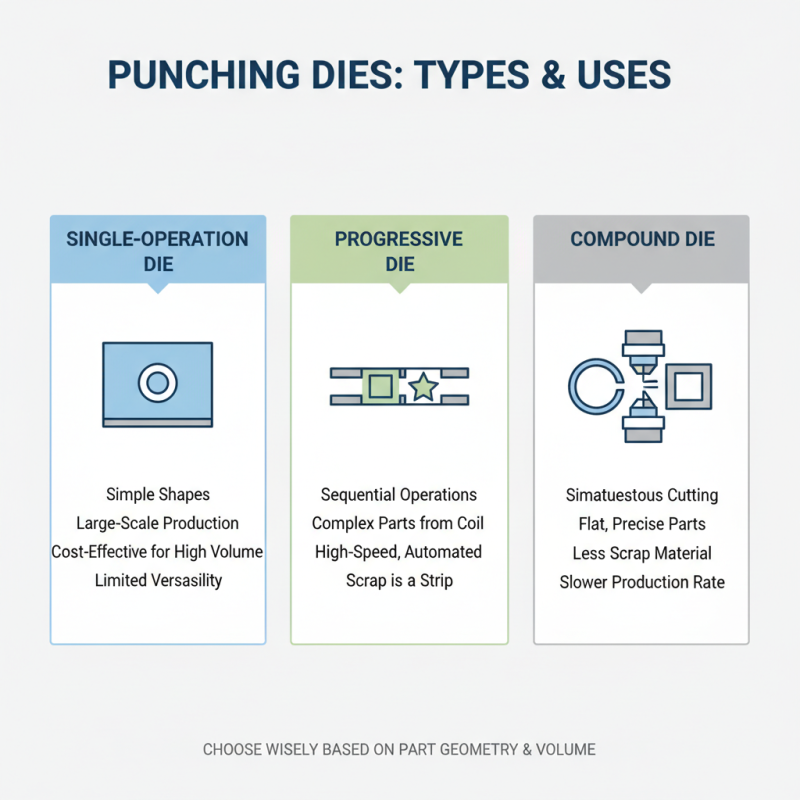
When choosing the right punching die, it’s vital to understand the various types available on the market. There are single-operation dies, progressive dies, and compound dies. Each type serves different purposes and production needs. For example, single-operation dies are often ideal for large-scale production of simple shapes. However, they may lack the versatility needed for complex designs.
Statistics show that around 70% of manufacturers prefer progressive dies for their cost-effectiveness in high-volume production. Progressive dies allow multiple operations in one machine cycle. They can dramatically speed up manufacturing processes. Yet, they require a well-planned design phase. A poorly designed progressive die can lead to costly errors.
Tip: Always evaluate the material you plan to punch. Different materials require different die specifications. Additionally, consider the thickness of your materials. A thicker material often demands a more robust die design.
Tip: Consult with experts or use industry reports to find the best options for your needs. Some reports indicate that improper die selection can lead to a 30% increase in waste. Be aware of these potential pitfalls during your selection process.
Assessing Cost and Durability Factors in Punching Die Choices
Choosing the right punching die involves a careful look at cost and durability. According to industry reports, nearly 30% of businesses face financial loss due to inadequate tooling. A high-quality die can be an investment. Opting for cheaper options may save money upfront but often leads to unexpected costs later.
Durability is another critical factor. A punching die should withstand hundreds of thousands of cycles. Research indicates that dies with proper material composition last up to 40% longer than their counterparts. Consider factors such as wear resistance and heat treatment. These play a significant role in the die's longevity. It’s essential to evaluate the materials used. Stainless steel may be more expensive but often pays off through durability.
Budget constraints can lead to compromises. Sometimes, a cheaper die breaks down faster than anticipated. This can cause production delays. A delay can spiral into increased costs and lost client trust. Testing and pilot runs are vital before full-scale implementation. This practice helps avoid the pitfalls of poor die selection. Being thorough in assessing both cost and durability can make or break project success.