Top Metal Mold Manufacturer Trends for 2026 What to Expect
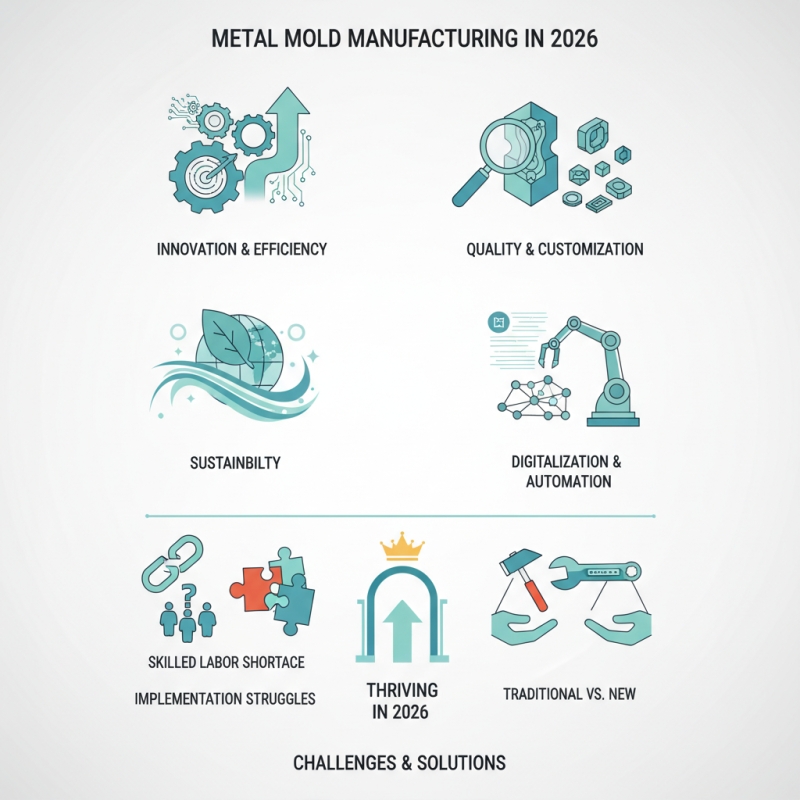
As we approach 2026, the landscape of the metal mold manufacturer industry is evolving rapidly. Emerging trends highlight the need for innovation and efficiency. Companies must adapt to changing demands and technology. A focus on sustainability is becoming increasingly important. Manufacturers are now investing in eco-friendly materials and processes. This shift is not just about compliance; it's about market competitiveness.
Consumer expectations are shifting. Clients seek manufacturers who prioritize quality and customization. The ability to offer unique solutions will set companies apart. There is also a visible shift toward digitalization. Automation and smart technologies streamline production processes. Yet, this transition poses challenges. Many manufacturers struggle to implement these new systems effectively.
Furthermore, the skilled labor shortage remains a pressing concern. Finding qualified workers can hinder growth. As trends develop, industry experts must reflect on these challenges. Balancing innovation with traditional practices is crucial. Looking ahead, how can the metal mold manufacturer industry overcome these hurdles to thrive in 2026?
Emerging Technologies in Metal Mold Manufacturing for 2026
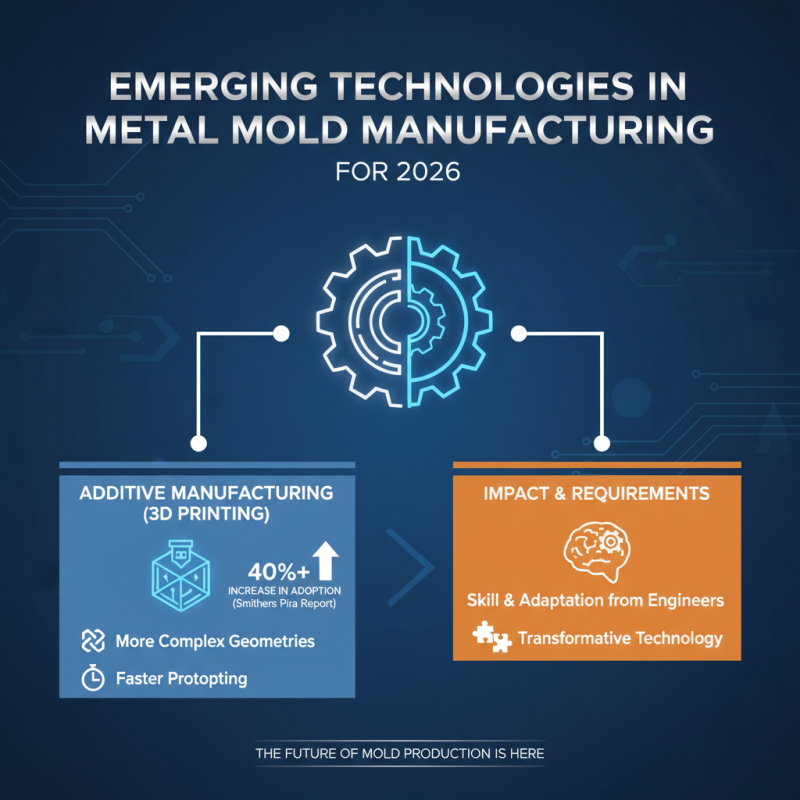
Emerging technologies are set to transform metal mold manufacturing by 2026. One significant trend is the rise of additive manufacturing. According to a report by Smithers Pira, the adoption of 3D printing in mold production could increase by over 40% in the next few years. This technology allows for more complex geometries and faster prototyping, but it also requires skill and adaptation from engineers.
Another vital technology is the integration of artificial intelligence. AI enables predictive maintenance and quality control in the manufacturing process. A study by Deloitte highlights that 70% of manufacturers are investing in AI to enhance operational efficiency. However, this transition may pose challenges in workforce training and data security. Companies must navigate these complexities carefully to avoid potential pitfalls.
Additionally, the use of advanced materials like composites is gaining traction. These materials can offer strength and lightness, but they also introduce new processing challenges. Industry experts emphasize the need for ongoing research and development to fully harness these materials' potential. As companies explore these emerging technologies, they must also reflect on the implications for sustainability and waste management in the manufacturing cycle.
Sustainability Practices Transforming the Metal Mold Industry
The metal mold industry is undergoing significant transformation due to
sustainability practices. A recent report indicated that
70% of manufacturers are adopting eco-friendly materials in production. This shift not only
reduces carbon footprints but also enhances product lifespan. Companies are
increasingly using recycled metals, which lowers waste and energy consumption.
Sustainable practices often require a change in production methods. For instance, integrating 3D printing technology has emerged as a viable solution.
This technique minimizes material waste. Furthermore, it allows for more intricate designs, reducing the need
for multiple molds. Still, not all companies have embraced this change. Some face challenges in transitioning
from traditional methods.
The push for sustainability is reshaping customer expectations too. A survey found that 80% of
consumers prefer products made from sustainable materials.
This demand pressures manufacturers to adapt quickly. However, not every company meets these
standards consistently. The transition brings its own set of complexities, and there’s still room for
improvement.
Market Demands Driving Innovation in Metal Mold Design
The demand for innovative metal mold designs is reshaping the industry. Factors such as efficiency and sustainability are driving this shift. With manufacturers pushing for higher precision, the focus on advanced materials and techniques is more pronounced. Designers are exploring lightweight materials. These innovations are essential for creating molds that reduce energy consumption.
Additionally, customer expectations are evolving. They seek products that are not only functional but also environmentally friendly. The rise of automation is another game-changer. Automated processes can increase accuracy and reduce human error. However, the integration of technology presents challenges. Adapting to new systems requires training and adaptation. Manufacturers need to navigate these complexities carefully.
Emerging trends such as 3D printing are also influencing mold design. This technology allows for rapid prototyping, offering a flexible solution for creating intricate designs. Yet, the costs associated with initial investments can be a hurdle. Companies must weigh the benefits against the financial burden. Continuous improvement in metal molds will require a balance of innovation and practicality. Embracing these changes can secure a competitive edge in the market.
Workforce Trends Shaping the Future of Metal Mold Production
In 2026, the workforce dynamics in metal mold production will significantly shift. The industry is grappling with an aging workforce. Many skilled workers are nearing retirement, leading to a talent gap. Businesses may struggle to fill these gaps without proper training programs. New employees need hands-on training to meet high standards.
Technology will play a pivotal role in shaping these trends. Automation and artificial intelligence will enhance efficiency but may reduce the need for manual labor. This could lead to a less experienced workforce. However, it is essential to upskill existing workers to adapt to technological advancements. Investment in continuous learning will become vital.
Diversity and inclusion will also reshape hiring practices. Companies that embrace diverse candidates often benefit from fresh perspectives. This can lead to innovative solutions in mold design and production. Nonetheless, organizations must reflect on their efforts to create an inclusive culture, as simply hiring diverse talent is not enough. Overall, these trends could redefine how businesses approach talent management in the metal mold industry.
Automation and Smart Manufacturing in Metal Mold Creation
The future of metal mold creation is leaning heavily on automation and smart manufacturing. As manufacturers face increasing demands for customization and efficiency, these technologies are essential.
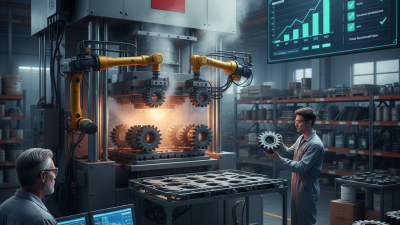
Automation can reduce human error and improve precision. With robotic systems, molds can be produced more quickly and consistently. This shift helps meet urgent market requests while maintaining high-quality standards.
However, the implementation of automation brings its own challenges. There is a steep learning curve for operators to understand new machinery. Some may worry about job security in an automated environment. Issues such as system malfunctions can lead to costly downtime. Therefore, companies must invest time in training and support for personnel. Building an adaptable workforce is crucial for maintaining operational efficiency.
Smart manufacturing systems can offer real-time data analytics. These insights help in monitoring processes and managing resources better. Yet, reliance on technology raises concerns about data security. Vulnerabilities may expose sensitive information. Companies need to prioritize cybersecurity measures as part of their strategy. Balancing innovation with security remains a significant challenge in the evolving landscape of metal mold manufacturing.