2026 How to Select Die Mold Components for Optimal Performance?
Selecting die mold components is a crucial task that impacts overall mold performance. The right components ensure efficiency and quality in production processes. Quality die mold components lead to better output and less downtime. However, not all components are created equal. Selecting the wrong ones can lead to significant issues.
Experience in the field reveals that compatibility between components is vital. A thorough understanding of materials and designs is essential. Each component plays a unique role in the mold's functionality. For instance, the selection of steel grades can affect durability and precision.
Mold makers must also consider the cost-effectiveness of their choices. Investing in high-quality die mold components often pays off in the long run. Yet, less expensive options might be attractive but could cause unforeseen problems. Balancing quality and cost requires careful thought and expertise. As the industry evolves, staying informed about the latest advancements is necessary for optimal performance.

Understanding Die Mold Components and Their Functions
Understanding die mold components is crucial for achieving optimal performance in manufacturing. Each part serves a unique function that collectively influences the efficiency of the production process. According to a report from the International Journal of Advanced Manufacturing Technology, up to 30% of production inefficiencies stem from poorly selected components. Understanding these components can help reduce waste and improve output quality.
Mold bases are the foundation of the entire system. They must withstand high pressure and temperatures. The choice of material impacts durability. Steel is often preferred for its strength, but aluminum is lighter and cheaper. Cavity inserts are another essential element. They shape the product but also need to be easily replaceable. This flexibility can decrease downtime, an important metric. A study indicated that proper component selection could reduce cycle times by 15%.
Proper venting systems are vital. Without them, gas can become trapped, leading to defects. This oversight can result in rework and added costs. A recent analysis showed that nearly 20% of defects originate from inadequate venting. A simple adjustment in design can enhance airflow and minimize these issues. However, many operations overlook this component, which may require a deeper analysis of overall mold design.
2026 How to Select Die Mold Components for Optimal Performance?
| Component |
Function |
Material |
Performance Factor |
| Ejector Pins |
Facilitates the removal of the molded part from the die |
Alloy Steel |
High strength and wear resistance |
| Guides |
Ensures precise alignment of die halves |
Bronze |
Low friction and durability |
| Heat Exchangers |
Regulates temperature for optimal molding |
Aluminum |
Efficient heat transfer |
| Cavities |
Forms the shape of the final product |
Tool Steel |
High wear resistance |
| Sprue |
Channel for molten material to enter the mold |
P20 Steel |
Moderate hardness |
Evaluating Material Selection for Durability and Performance
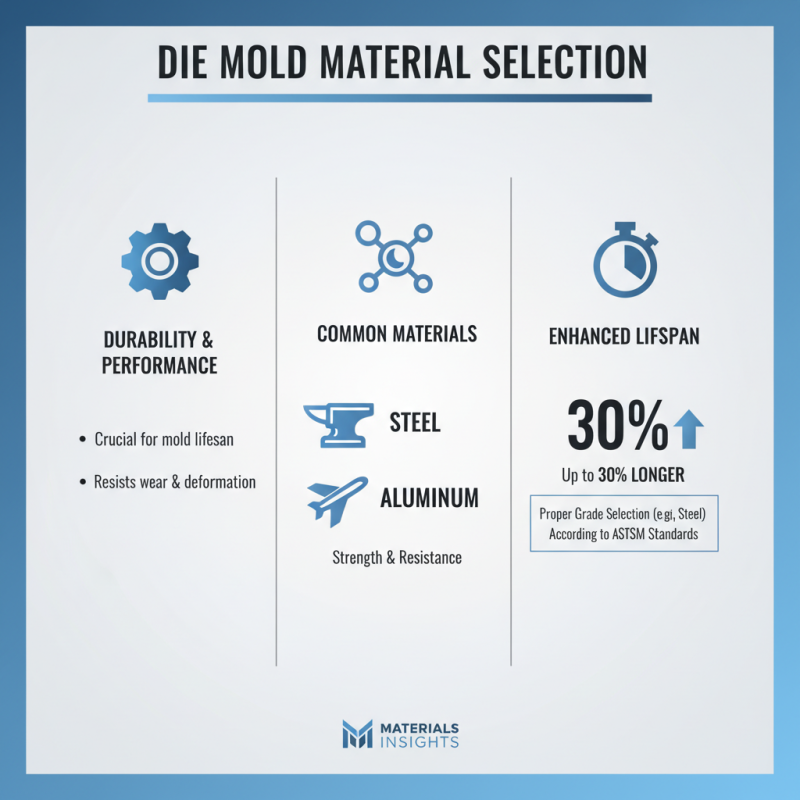
When selecting die mold components, material selection is crucial for durability and performance. Materials like steel and aluminum are common due to their strength and resistance to wear. According to the American Society for Testing and Materials (ASTM), proper material selection can increase mold lifespan by up to 30%. Choosing the right grade of steel, for example, can resist deformation under high pressure.
Tips: Always consider the operational environment of your molds. High-temperature or corrosive settings may demand special alloy coatings.
Failure to assess the impact of material properties can lead to unexpected costs. For instance, using lower-grade materials might save money initially but may double maintenance costs later. Studies in manufacturing processes indicate that improper material choice generates significant downtime.
Tips: Evaluate the trade-offs between initial costs and long-term performance. Consult with industry experts to gain insights that are often overlooked.
Paper documents are useful, but digital platforms provide a broader scope of data. Employ analytical tools to evaluate each component’s performance under simulated conditions. Enhanced durability often requires compromise but leads to improved overall efficiency.
Key Factors in Designing Die Mold Geometry
Designing die mold geometry requires an in-depth understanding of various factors. The shape and structure of the mold significantly influence the final product's quality. For example, the cooling channels' layout is critical. Misplaced channels can lead to uneven cooling, resulting in warping. The gate design also plays an essential role. It dictates the flow of molten material into the mold cavity. Poor gate placement can cause incomplete filling or surface defects.
Another key factor is the material used for the mold. Different materials react differently under heat and pressure. Steel molds offer durability but can be expensive. Aluminum molds are lightweight and cost-effective but wear out faster. Understanding the trade-offs is vital. It may be tempting to choose based solely on cost, but that could lead to lower performance.
Moreover, mold maintenance routines must not be overlooked. Regular checks can prevent significant failures. Small cracks can grow if ignored. Balancing the design with practical considerations often reveals challenges. The objective is to optimize performance while reducing risks. Each decision should be made with care. Mistakes in the design phase can lead to costly corrections later on.
Importance of Precision in Component Manufacturing
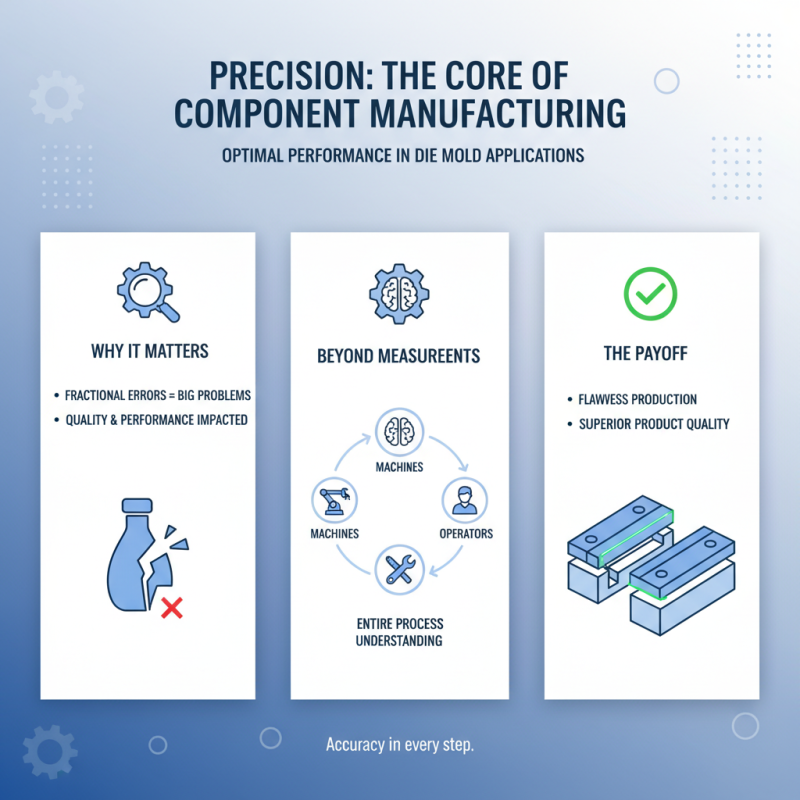
Precision in component manufacturing is critical for achieving optimal performance in die mold applications. Small variations in dimensions can lead to significant issues during production. Even a fraction of a millimeter can affect product quality. This precision is about more than just measurements; it involves understanding the entire manufacturing process. Each machine, tool, and operator plays a role in maintaining that accuracy.
Achieving precision requires a commitment to quality at every step. Rigorous testing and inspection of components ensure they meet stringent standards. However, challenges can arise. For instance, fluctuations in temperature during production can alter material properties. Even seasoned professionals must remain vigilant. They must continually refine processes and adapt to evolving technologies. Mistakes can happen, but learning from them is crucial. This iterative process is what leads to improved performance over time. Constructing a flawless die mold component may seem straightforward, but it demands ongoing attention to detail and a willingness to adjust methods.
Maintenance Practices for Prolonging Die Mold Lifespan
Maintaining die mold components is critical for achieving optimal performance and prolonging their lifespan. Regular upkeep can prevent costly downtimes. Frequent cleaning and inspection help identify wear and tear before they become bigger issues. Operators should follow a structured maintenance schedule tailored to their specific molds.
Tips: Inspect all components for wear at least once a month. Use non-corrosive cleaning agents to avoid damaging surfaces. Pay attention to lubrication. Regular grease application can reduce friction and wear.
Monitoring temperature is also essential. High heat can lead to deformation or failure. Implement cooling systems if necessary. Consider the environment where molds operate. Dust and contamination can lead to serious issues later on. Sealing molds can help reduce the impact of these factors.
Tips: Maintain optimal operating temperatures. Install air filters to minimize dust. Create a controlled environment for mold storage. Attention to these details can save time and money, ensuring molds perform well over their lifespan.
2026 How to Select Die Mold Components for Optimal Performance
This chart illustrates the impact of various factors on the performance of die mold components. Each factor is rated based on its contribution to optimal performance, highlighting the importance of proper selection and maintenance practices.